I woke up before sunrise yesterday morning and decided to embark on an early morning walk. I clocked 10 km before 9 a.m. What a way to start the day! I had hoped for the sunrise to paint the sky brightly, instead the colours were soft… I called it a ‘cotton candy sky’ in my Instagram post.
The day passed quickly with several meetings and facilitating a lengthy Zoom session. When I was finally ready to sit down for dinner I looked out the living room window and discovered a virtual painting created by Mother Nature. I grabbed my camera and headed outside. The view from the east facing deck caused me to pause and take a look to the west… I have no words but I have images to share! Enjoy.
Who thinks watching the sky is wasting time? I can’t get enough of Mother Nature’s master pieces. Have a wonderful day. Best wishes, Anna
… and watching the tide go out from the salt marsh, this particular crow caught my attention as it was undeterred even when I approached.
This behaviour prompted me to conduct a little research. The crows we have here along the beaches and our backyard are large. In the beginning, I thought they might be ravens but the beak and tail feathers don’t meet the criteria. So, I settled for the fact that they were just very large, well-fed crows. But, I just discovered that there is a species of crows that is referred to as Fish Crows and after reading the description below I believe “our” crows here are indeed Fish Crows.
According to https://www.allaboutbirds.org/guide/Fish_Crow/id# : “Fish Crows fit the standard crow shape: hefty, well-proportioned birds with heavy bills, sturdy legs, and broad wings. At rest, Fish Crows’ wings fall short of their medium-length, square tails.”
I love the crows in our backyard! Here is an image I captured right after we moved into our house.
There are at least two crows on this tree most days. I will keep my eyes open to create images when they congregate close to the house again.
Wishing you a day filled with sunshine and laughter. Life is too serious too often. Best wishes, Anna
Season of mists and mellow fruitfulness, Close bosom-friend of the maturing sun; Conspiring with him how to load and bless With fruit the vines that round the thatch-eves run; To bend with apples the moss’d cottage-trees, And fill all fruit with ripeness to the core; To swell the gourd, and plump the hazel shells With a sweet kernel; to set budding more, And still more, later flowers for the bees, Until they think warm days will never cease, For summer has o’er-brimm’d their clammy cells … – John Keats
I am heading into a contemplative and quiet day to start the week out well. Best wishes, Anna
The Glooscap Trail is an alternate route to take when traveling from Amherst to Truro. Yes, it is significantly longer but if you have the time do yourself a favour and veer off. The Trail leads you through Parrsboro and along the Bay of Fundy and the views are magnificent. How lucky are we to live on this amazing road. We travel it regularly when we have appointments in Truro or its surrounding villages.
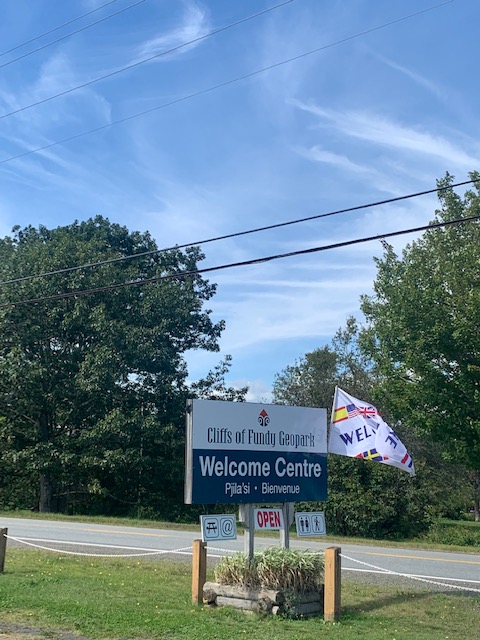
We finally took the time a couple of weeks ago and stopped into the Cliffs of Fundy Geopark Welcome Centre in Central Economy (also known as the Cobequid Welcome Centre). The staff and volunteers are well informed and their passion for this region really shows in the personalized tours they are willing to lead.
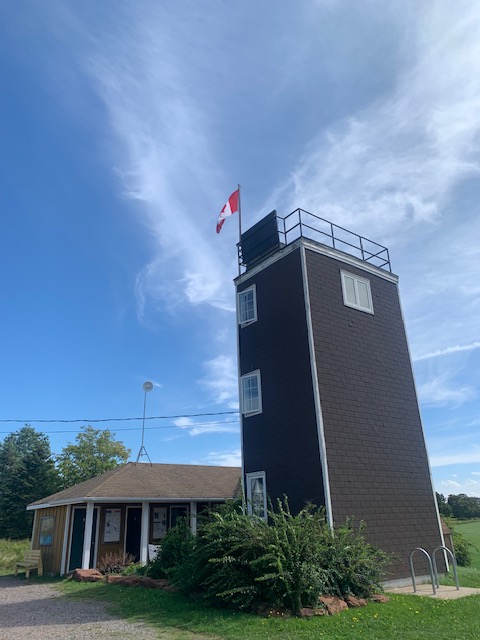
This hard-to-overlook landmark is one of the main attraction for tourists. The WW II watch tower was moved from Jacob’s Lane Beach to the location along the Glooscap Trail in the 1990s. Community fundraising efforts have put this monument on the map.
We really enjoyed our interaction with the staff and when Anita offered to take us up the tower we accepted… Well, I am not one too fond of heights and it took some serious self-talk to get me out of the stairwell and onto the observation deck at the very top of the tower.
The 360 degree view is spectacular! From the Cobequid Mountains in the north and east to Parrsboro and Cape Split in the distance looking west and the vast tidal flats of the Minas Basin this was worth the climb up the narrow staircase and emerging high above the parking lot.
We learned a lot of the significance of this area during WW II, the geological discoveries and Colin might have found another lead that will prove beneficial in his genealogical research on his mom’s side.
… the Fundy Shore is always a treat! We attended Thursday Night Story Time last night. After a day of running errands in Truro we arrived back in Parrsboro and had barely enough time to put the groceries away and head to Ottawa House Museum. The rain had held off until just before we arrived at our last destination for the day.
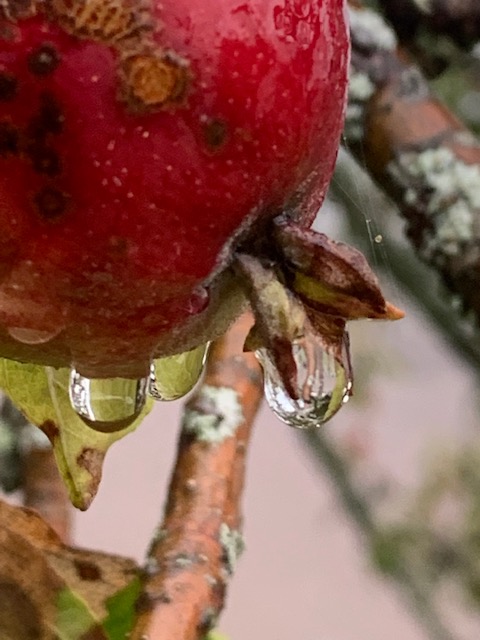
At first I was drawn to the heavy raindrops suspended from the fruit-laden tree..
With time to space I aimed the camera at the shoreline toward the town of Parrsboro…
…and then toward Partridge Island and East Bay!
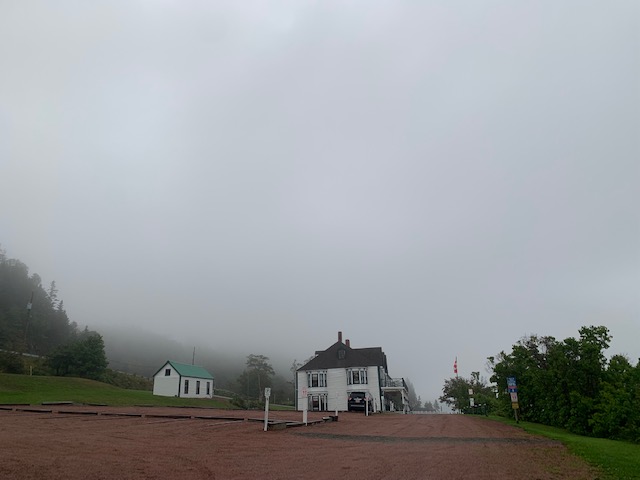
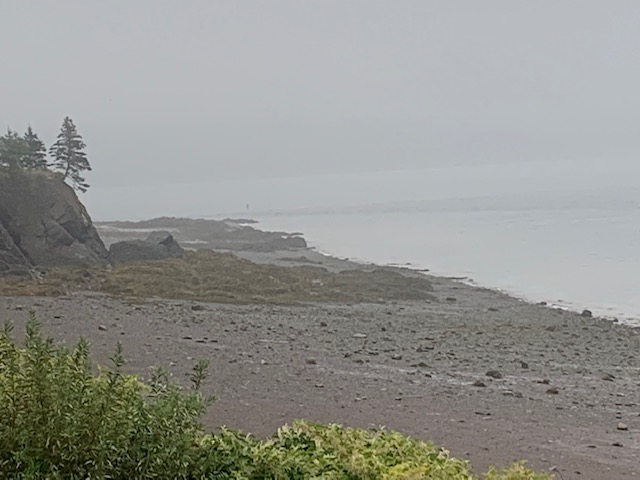
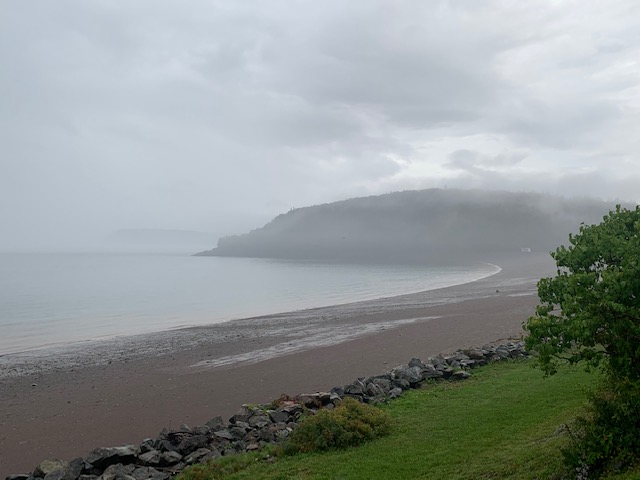
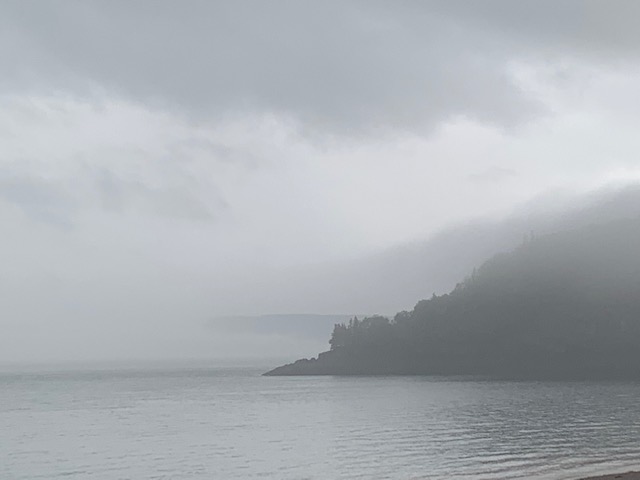
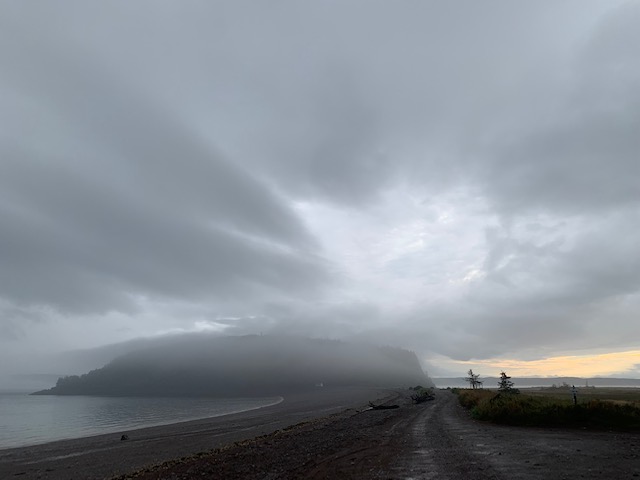
The waves were lapping at the shore and perhaps it was my imagination, but the sounds were muffled with the heavy mist shrouding the magnificent landmarks. I decided to take the time and hurried down the path to the beach to get a better look.
Just before I tucked away my phone I decided to zoom out and that was the precise moment when the landscape transformed…
Presenting my favourite image from last night… mysterious and mesmerizing. Taking the extra minute to get down to the beach for a better look was definitely the best decision I made all day.
Wishing you a wonderful weekend filled with magical moments like this! Best wishes, Anna
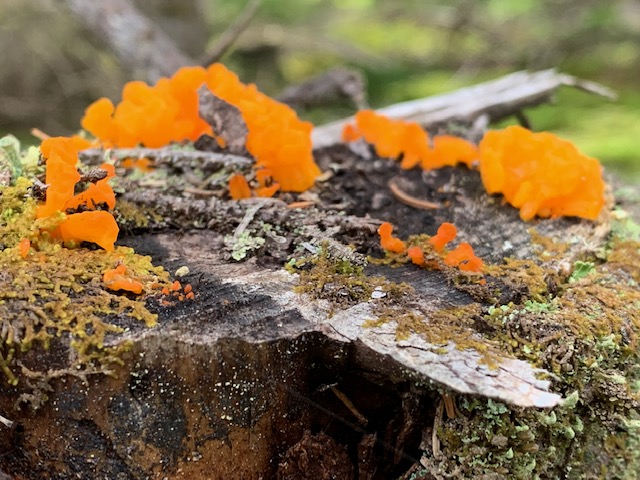
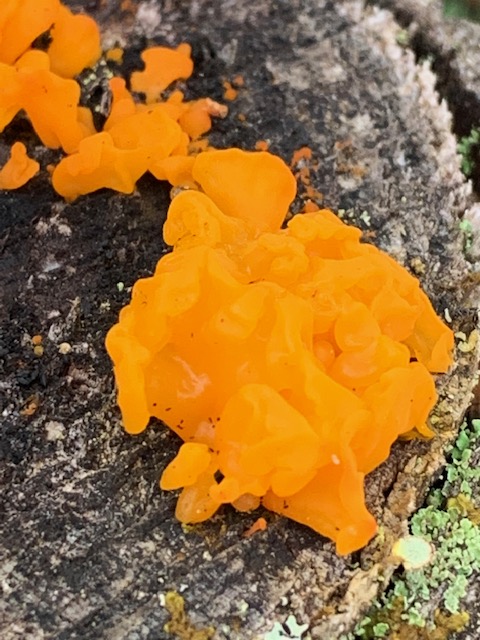
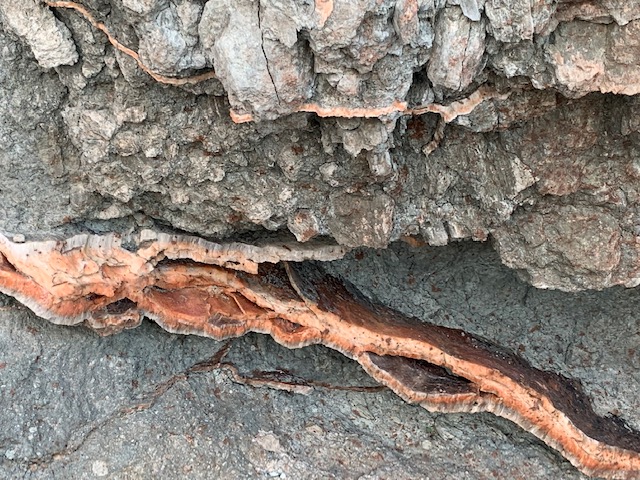
What happens when you are out looking for edible mushrooms? You don’t always find what you seek. However, it pays to keep your eyes open for unusual discoveries. I kept my camera close by and when I was drawn in by the orange glow of these fungi I just had to capture them. It is called Red Tree Brain (Peniophora rufa), also known as Stereum rufum, and Cryptochaete rufa, the species bursts out from bark and fallen limbs and logs.
It was the texture and bright colour that drew me in… and just a little further down the path more orange called to me!
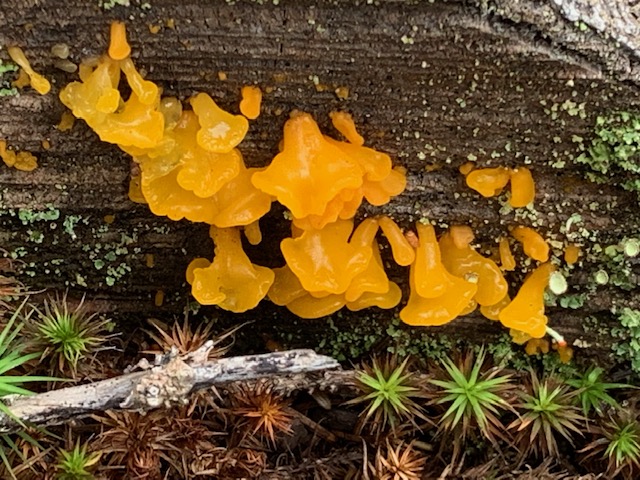
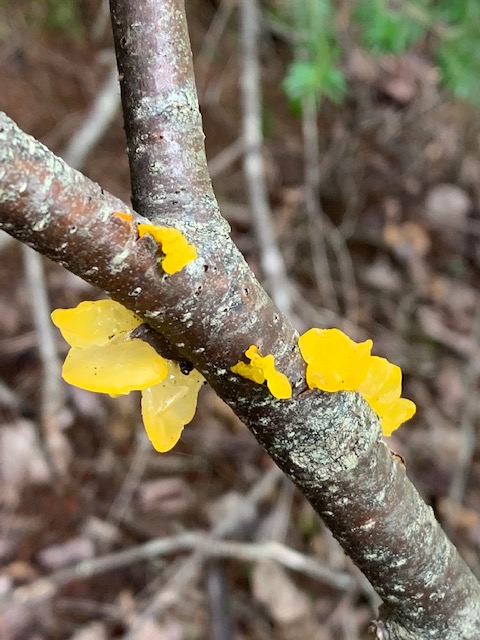
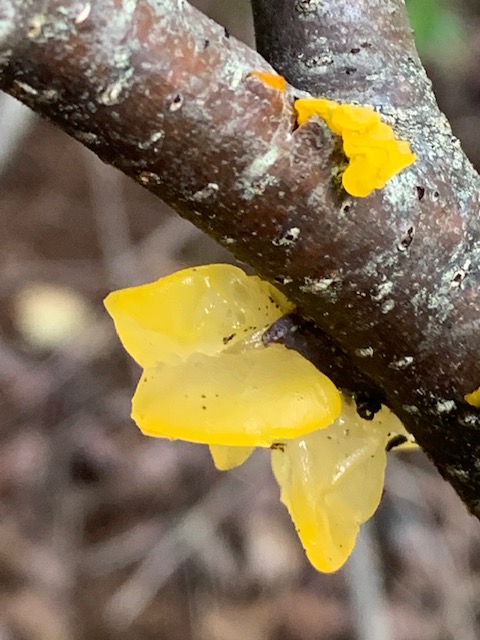
Yellow Fairy Cups (Bisporella citrina) are categorized alongside Slimes, Jellies and Crustlike Fungi in my Audubon Field Guide to Mushrooms. It states that these mushrooms grow on decaying wood throughout North America. I have previously discovered these tiny colour bursts in British Columbia.
As the days get cooler and shorter, nature’s colours change foreshadowing fall. I am actively observing how our surroundings adapt. Check back soon as I capture and share these autumnal changes.
Wishing you a day filled with unexpected discoveries and the presence of mind to deeply enjoy them. Best wishes, Anna
I rediscovered one of my books in my library the other day and have found it a wonderful way to escape for a few minutes each day as I open it up at random and immerse myself in a page or two of the writing.
The book is “The Photographer’s Playbook”published by aperture and edited by Jason Fulford and Gregory Halpern. It contains interviews and great suggestions to hone one’s creativity with a special focus on photography. I came across the following passage by Melinda Gibson just this morning and it took me back three years when I was dealing with retinal tears and the possibility of losing my sight… The essay resonated deeply within me. I hope you find it as inspiring as I do.
Losing an Eye
“One has to lose the use of an eye for a substantial period to find how life is altered in its absence.” – Oliver Sacks
“Left or right? Which eye is the most dominant (the one that you use when looking through the viewfinder)? Now cover this eye with a patch, tape, or stickers – anything that ensures complete coverage. Not with your hand, since you can peek through your fingers! Venture out with your forced disability and start photographing. Sitting here, writing this with with my right eye covered, I understand the difficulty of this task. Everything I see, I have to really look at. My balance is off, and I move more closely toward objects to make sense of their shapes. Words and sentences take longer to read and there is a slight blur, a softness around the edges. But what is incredible is how “losing and eye” fundamentally alters the way we perceive and understand the environment around us and how much more we see when we are really forced to look. Remove your patch after and extended period of time and then start photographing with both eyes again. See just how much brighter, more balanced, and more focused this view is, but how quickly we revert to the “old ways” of looking.”
This exercise can easily transfer to any art discipline. I found it valuable to be reminded how precious sight is for all of us. Wishing you a day filled with colour and light, Anna
Have you heard about shinrin yoku simply translated to “forest bathing”? It gained popularity in Japan in the 1950s. Shinrin yoku literally translates to “forest bath” — it is the practice of “bathing” in the atmosphere of the forest. Participants in early Japanese shinrin yoku experiences would simply walk through the woods and enjoy the presence of the trees as they absorbed the quiet benefits of forest therapy.
While it started out as a simple meditation practice, researchers quickly began to discover that the simple practice of taking walks in the forest created a host of long-lasting health benefits for body and mind alike. Before long, science began to credit the practice of shinrin yoku.
Participants in shinrin yoku increase their well-being by taking walks in a forest environment alone or with forest therapy guides who help them access the relaxing power of walking through nature. It is important to mention that forest therapy isn’t the same as exercising. Shinrin yoku does not necessarily involve raising your heart rate as hiking or jogging would. The focus here is on the mental health benefits of immersing yourself in the natural world and letting your own mood guide your activity. It’s essentially a chance to step back from the cares of everyday life and simply be.
I went forest bathing yesterday, between rain showers. I find it truly enhances my mindfulness practice while it provides me with an opportunity to hone my contemplative photography skills.
Hope you enjoy today’s post as it can set the tone for the day after Labour Day. Best wishes, Anna
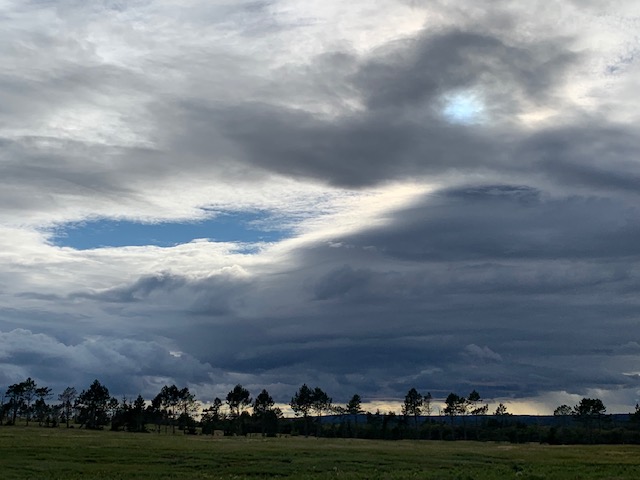
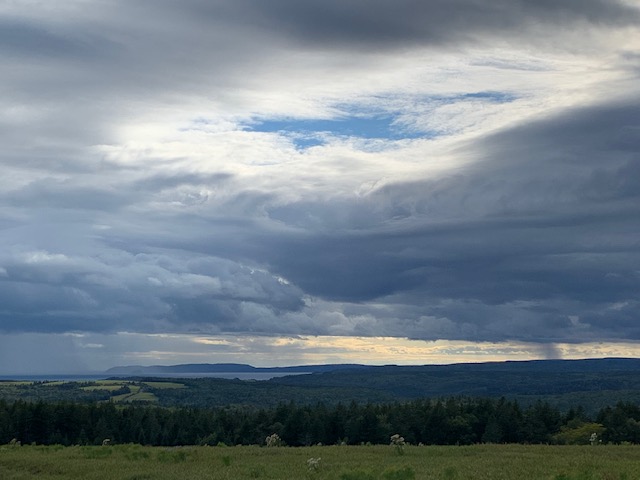
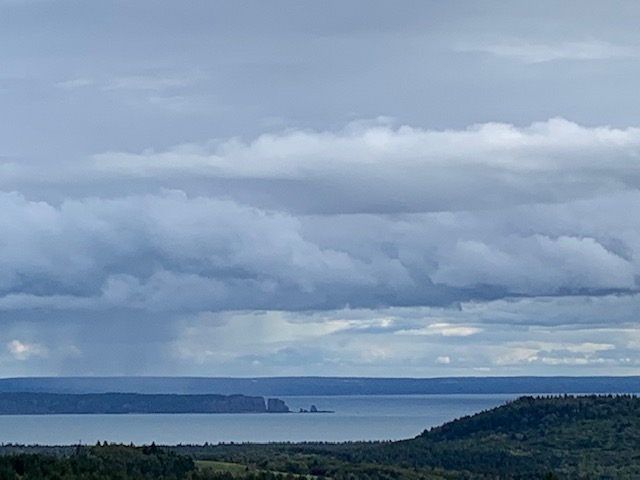
The weather can change quickly… in the Bay of Fundy!
We took the road less travelled from Harrison Settlement to Yorke Settlement over Glasgow Mountain last Saturday. Every time I arrive at this point of the mountain I very much enjoy the view. I have witnessed Cape Split shrouded in mysterious fog, full sunlight and with the rain approaching. I cannot decided what my favourite presentation of this view is…
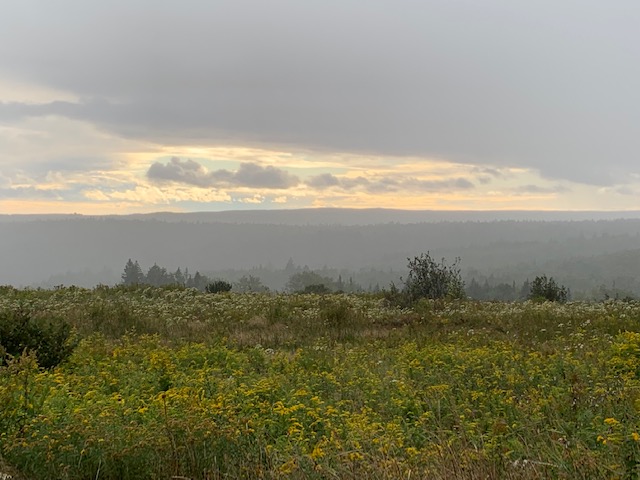
The last image is taken looking west toward Advocate and Apple River. By this time the wind was driving the rain sideways!
We moved to Nova Scotia from Saskatchewan which displays “Land of the Living Skies” on its license plates. “Canada’s Ocean Playground” has vivid skies and impressive vistas wherever I look! I can’t wait to do this drive again soon and check for fall colours and impressive clouds.
Hurricane Ida presented us with 85 mm of rain (according to a neighbour’s rain gauge) and a quiet day at home. At times the rain was running off the roof in sheets, too much for the eaves-troughs to handle. We suffered no ill effects, no leaks, dampness in the basement or other issues… except the yard needs attention as the grass and weeds are thriving.
During my walk yesterday morning I could hardly believe the size of the choke cherries! I swear they increased by at least 30% this week. I need to research how I can utilize these free berries! Then I had a thought… I wonder how the mushrooms are doing? A quick text to my friend Laura confirmed that she was curious herself and within 15 minutes we were off to one of our mushroom patches, collecting baskets in the back seat.
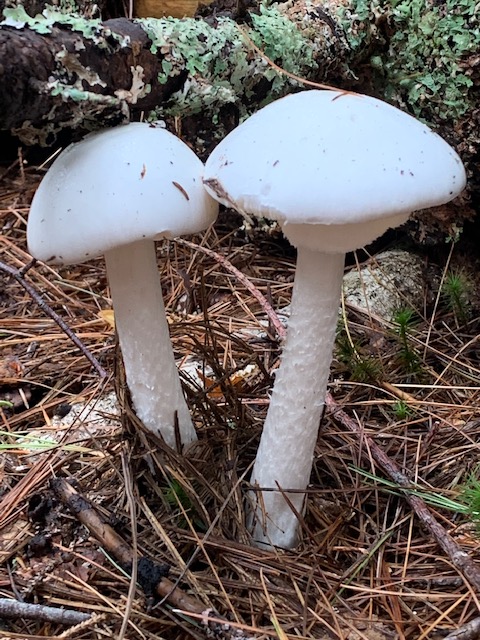
It was a great time to venture into the woods. Mushrooms were plentiful but not all are edible. However, where there are poisonous mushrooms there have to be edible ones as well.
The woods were teeming with mushrooms, many decimated by slugs, rodents and insects. We found a lobster mushroom which is touted to be a real delicacy but, once we harvested this monster from a rotten tree stump, it was obvious that it was beyond the point of salvaging even a small portion to taste for ourselves. We hope to return to the area and find more, if not this year, perhaps next year will present us with a specimen that is worth waiting for.
I found two patches of so called hedgehog mushrooms (Hydnum repandum). The first patch presented me with perfect specimens, barely touched by slugs and just as the mushroom reference book pictures. I was sure I had a winner! A little further in there was a patch of Chanterelles. They are easy to identify by their distinct colour and structure. Just as I was about to turn and head back to the road I saw some gnarly looking apricot coloured mushrooms I wasn’t too sure about. The insects and slugs seemed to find them tasty, they looked a bit worse for wear. I picked them out of curiosity. I posted a few pictures on a mushroom identification group based in New Brunswick fully expecting them to be inedible when within minutes I was told that they are a type of hedgehog mushrooms referred to as “sweet tooth” (Hydnum repandum) and that they are quite delicious.
I oscillated back and forth, took a little bite from one which was not that great, I must admit. I think my imagination was playing tricks on me and for a moment I felt like my tongue was going numb. I read and reread the passages in both highly ranking mushroom ID books we own, and decided to take the plunge. I cleaned them well, sliced them and fried them in butter with a little garlic and onion powder. They turned a most delicious golden and emitted a fantastic smell. That was all the convincing we needed. We ate them for dinner… and we are still doing well about 12 hours later.
Exploring the woods and less travelled paths while foraging is something I have grown to love here in Nova Scotia. Instead of turning around after we filled our baskets I carried on, following a road we had been on before. Before the heavy rain, that is…
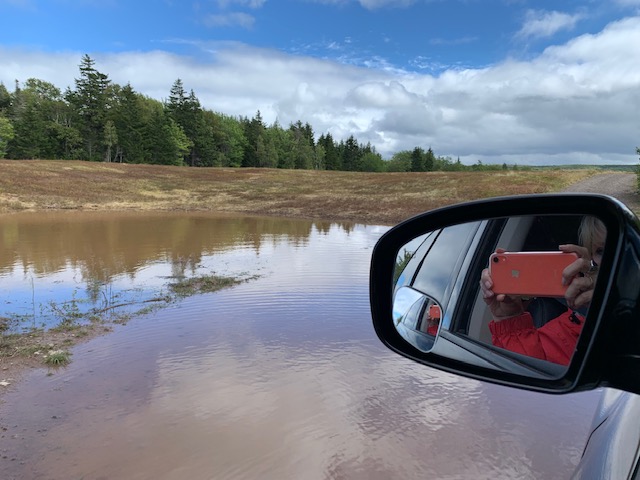
The sky was blue with amazing clouds, we emerged from the forest and the road was beginning to show signs of erosion. When I arrived at the puddle I was about to turn around. Instead I exited the car and picked up some rocks to throw into the huge puddle. The centre proved to be quite deep. I could not see the rock hit the bottom but the splash was quite high. I threw a few more rocks closer to the right edge. That convinced me to move through the water. I couldn’t resist taking a couple of pictures and once I made it, I stopped and took a picture to prove that I made it safe and sound. We carried on and I was glad the car has 4-wheel drive. It was only the second time I used that feature. The road had washed out significantly and Laura kept chuckling that “It looks just like a river bed, especially with the water still running off.” We crossed a small wooden bridge that had obviously been flooded during the storm. Debris had washed up along the edge of the bridge, it was quite the scene.
Eventually we made it back to the highway and continued home. We decided to check out our other mushroom hot spots another day. One road adventure was quite enough.
Thanks for riding along today. Wishing you all a fantastic weekend, Anna
The view toward Five Islands from the mouth of the Moose River, NS
I am always grateful for my eye sight, especially since I try to witness and capture the landscape from distant horizon line to the smallest detail up close.
In early June my friend and I ventured out to a beach that is less popular as it requires a steep walk downhill (which is not an issue) but, every time I am heading back to the car the hill seems to have gained a few degrees of steepness leaving me short for breath on occasion. Short rests really help… 😉
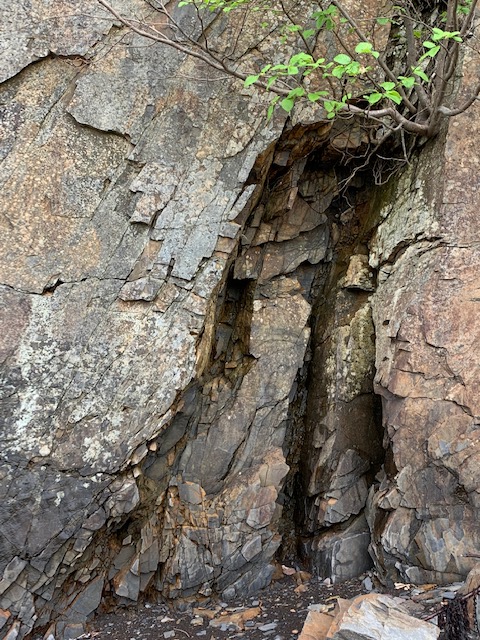
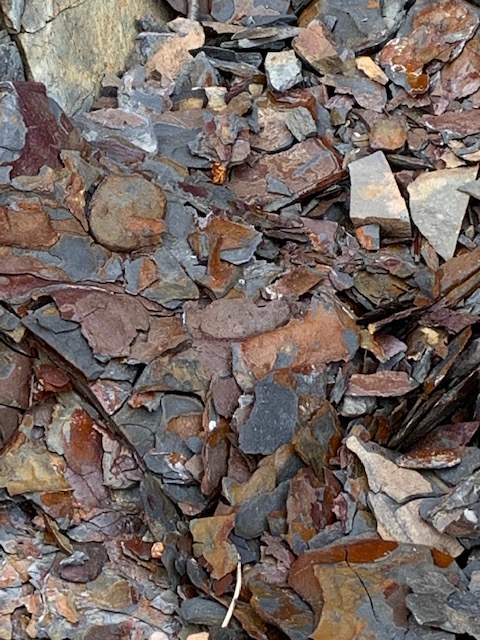
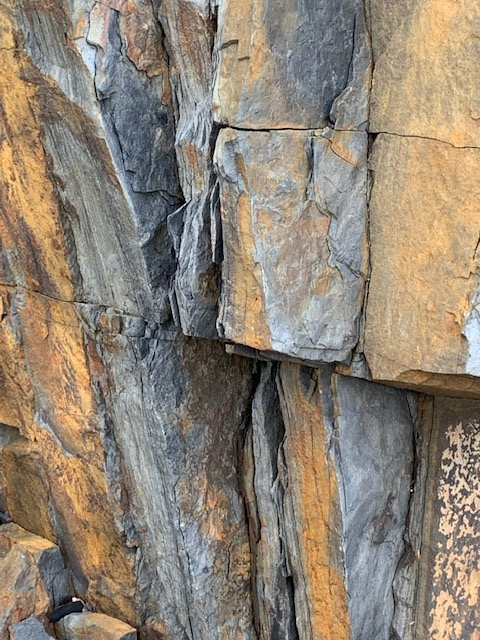
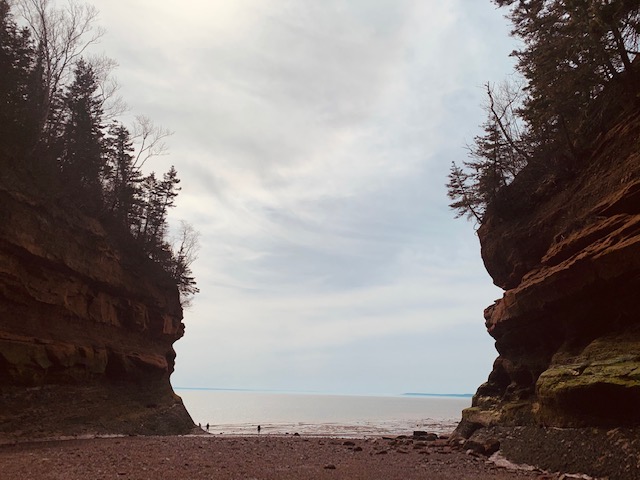
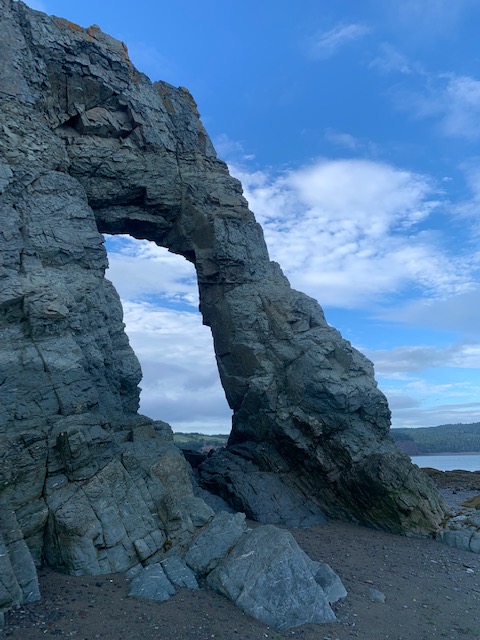
We tend to do little walking once we reach this particular beach as our attention is drawn to the cliffs close to where we access the beach. We approach these cliffs with great respect and carefully assess the situation as the shattered fragile rock pieces at the foot are a constant reminder how quickly a layer can give away and wreak havoc.
The hours pass quickly as we slowly move along and examine the colours and textures of ancient geological formations.
Every time I review these slideshow images I smile for various reasons. I adore the colours, textures, lines and layers. I find them intriguing and I am mesmerized by the diversity that presents itself along such a short stretch of these Bay of Fundy cliffs, not to mention I am always in awe when I consider the age of these formations and that at one point this geographical area was actually connected to Africa…
And then I burst into laughter: When I first posted a selection of images that include those in the slideshow above on FaceBook one comment was “I definitely see a nude or two in these.” Well, I am obviously not a painter. Perhaps my imagination is not as developed as I thought it to be but, no matter how often I scroll through the images I cannot find those nudes. 😉
I will continue to marvel at nature while exploring and capturing awe-inspiring scenery and great details. Have a wonderful day, Anna
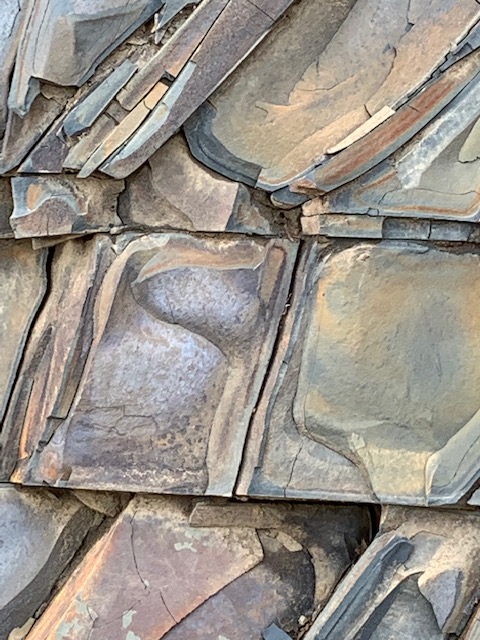
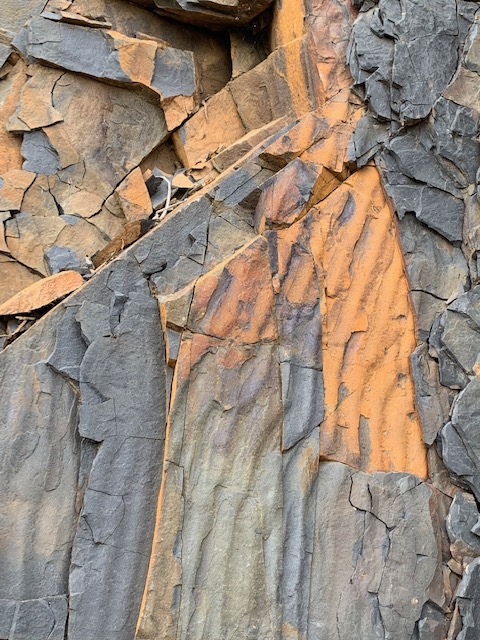
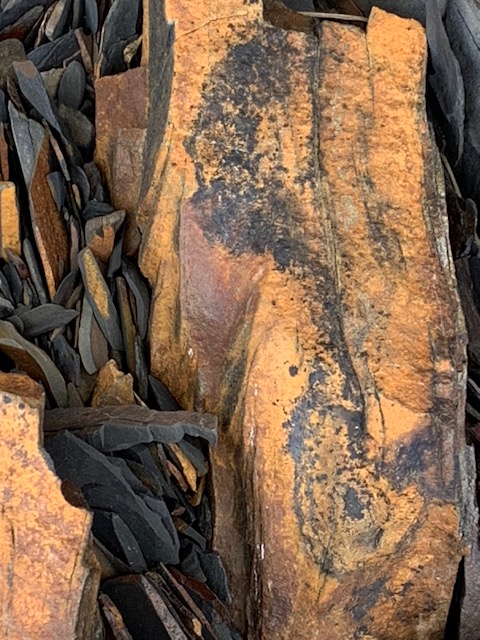
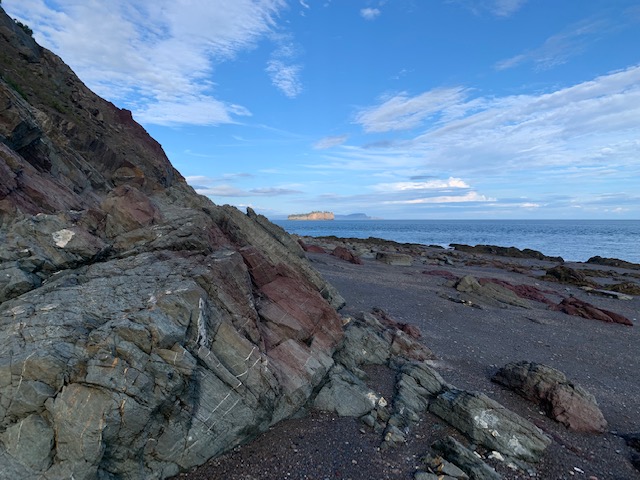
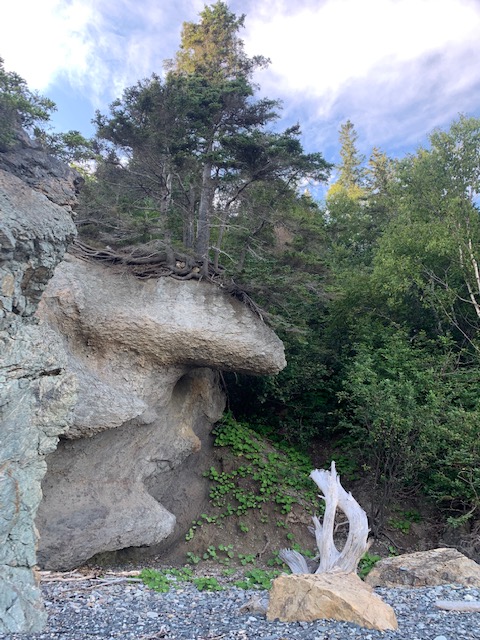
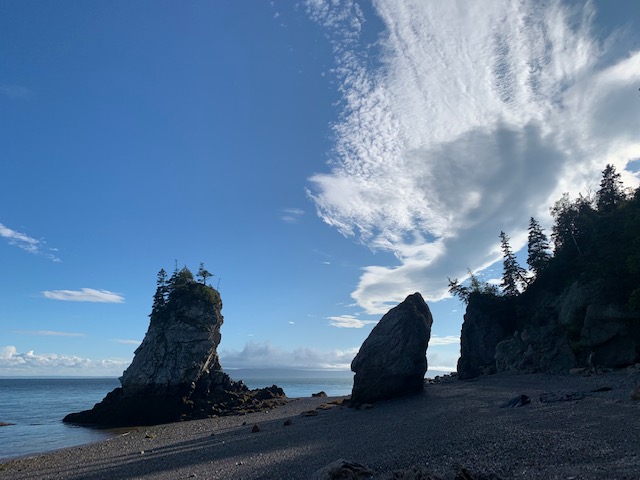
…That is how I observe the geology here along the beaches of the Fundy GeoPark. I equate my walk to Clarke Head several days ago to opening a new book, one filled with knowledge ready to be explored and applied. Positioning the camera close to the diverse surfaces of the rock cliffs that line the beach piques my curiosity time after time.
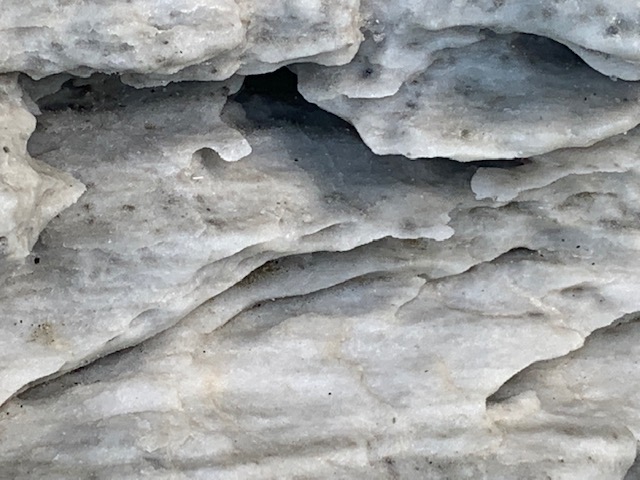
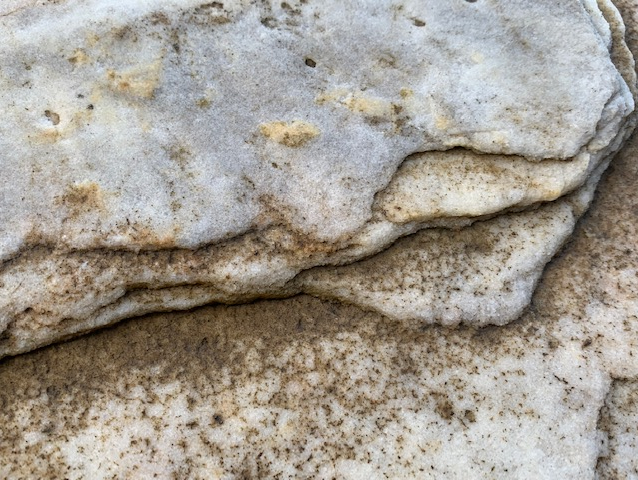
The images above are close ups of Gypsum. The common colours include pink, white and/or grey. Gypsum is so soft you can scratch it with your fingernail. It is classified as a chemical sedimentary rock. These originate and were formed in warm climates where minerals like Gypsum and Halite (salt) bonded as the seawater evaporated. These rocks are soluable and respond well to erosion. Therefore they are not commonly found as beach pebbles.
I captured them close to the cliff edge where they had been dislodged by the latest tidal action.
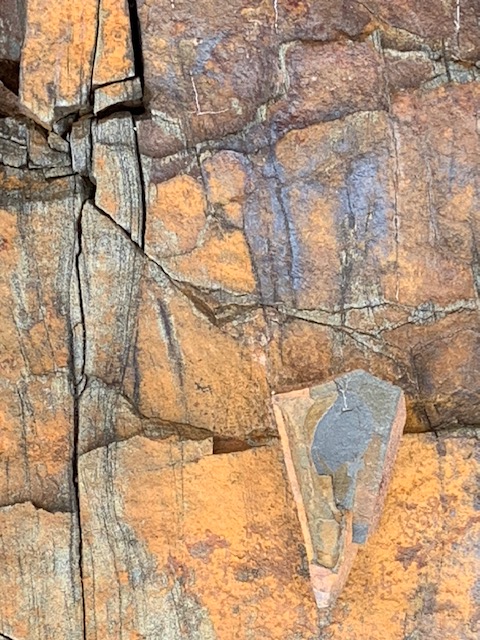
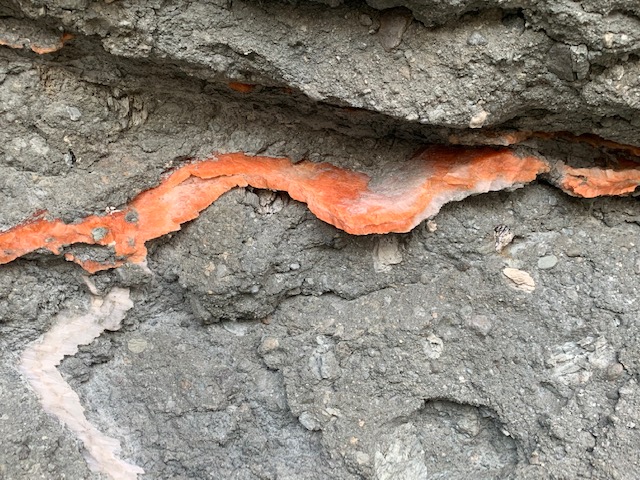
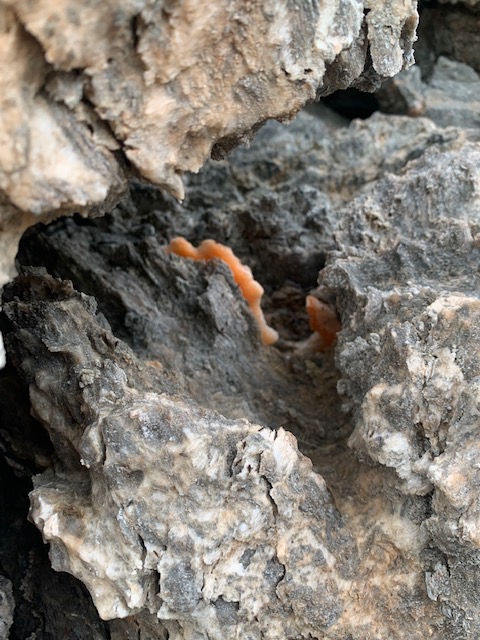
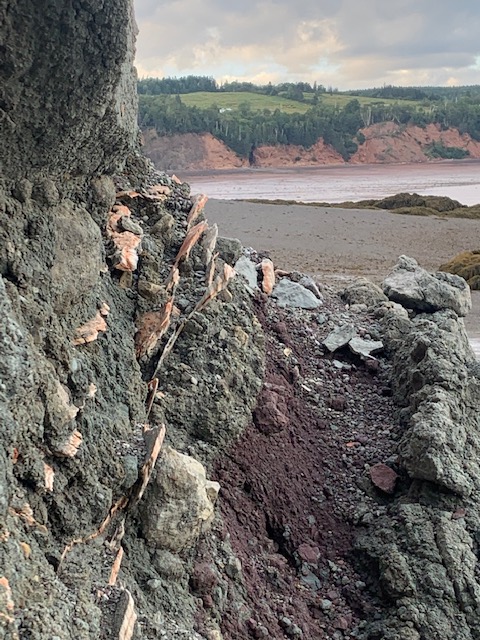
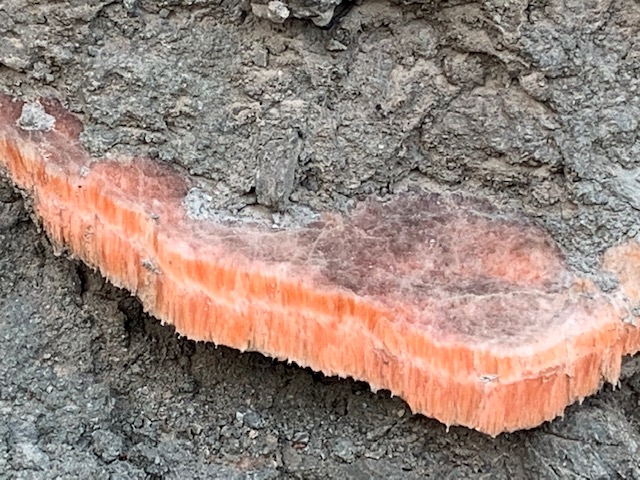
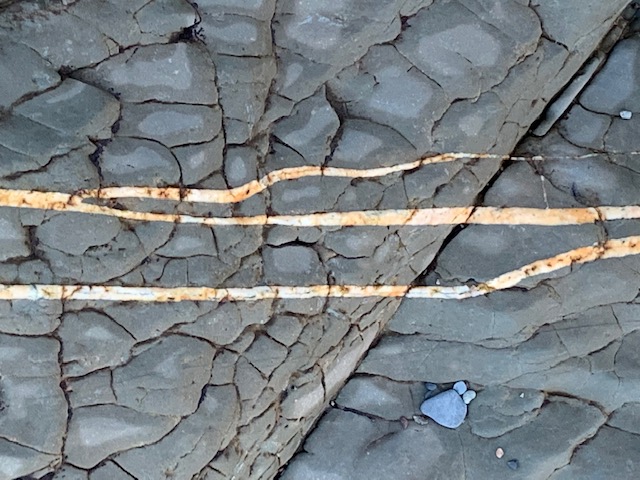
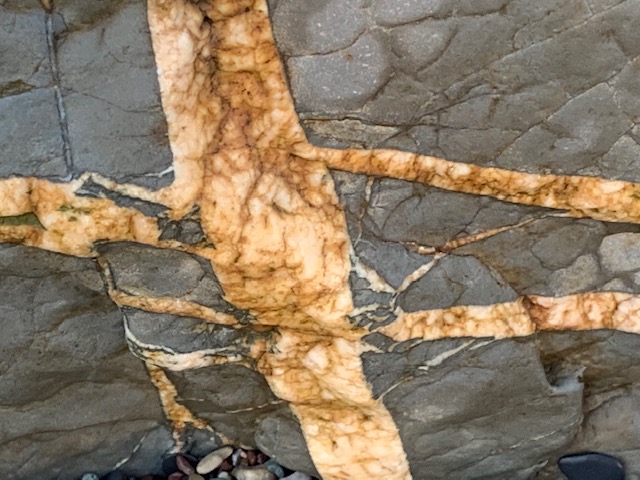
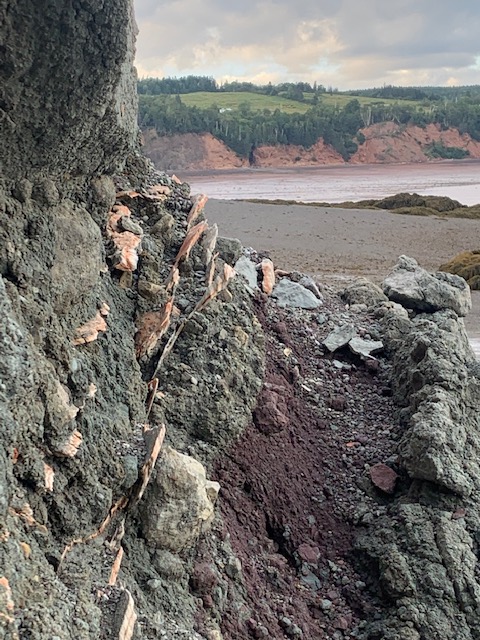
My first response when discovering these Chabazite veins along the cliffs was “The earth is bleeding…!”. With its dramatic colour ranging from pale orange to a deep red it always catches my eye instantly, since the very first time I spotted them last November. I have brought home small fragments that lose their intense colour quickly when the mineral is exposed to sunlight. Chabazite occurs most commonly in voids of basaltic rocks.
Upon further reading I discovered that Chabazite is found across the globe in India, Iceland, the Faroe Islands, the Giants Causeway in Northern Ireland, Bohemia, Italy, Germany, along the Bay of Fundy in Nova Scotia, Oregon, Arizona, and New Jersey. Yes, in Canada the only place to explore Chabazite it is the Bay of Fundy. How fortunate for all of us who live here! No need to venture far.
Today’s slide shows focused on only two discoveries I have made over the past ten months. There will be more sharing in the future. I sincerely hope you have enjoyed today’s eye-catching discoveries. Have a wonderful day and try to find some time to explore your own environment. Best wishes, Anna
Three full months of daily blogging… I didn’t think I had it in me when I first began to plan this journey of combining my photography and humble attempts at contemplative writing as a new path. Well, I made it, this is post #93 since June 1st, 2021. The Fundy Contemplations Blog is well on its way, evolving still and hopefully not boring and predictable.
What have a learned? I now know that I can follow through with new goals. It wasn’t all that hard to sit down every day to select images and weave sentences together that offer some aspects of interest for you, my loyal readers. Thank you for signing up and following along on my path of exploring the Bay of Fundy and other areas of my new home province.
Here is my promise to you: I will continue to create images and content of interest centering around photography and the history of Nova Scotia. It is truly amazing when I assess what I have shared thus far and how much more there is to discover and elaborate on. I have only pushed the proverbial door open a tiny crack. No words like “Open Sesame” are necessary as the images and history present spill forth, waiting to be repackaged for sharing.
Your feedback has been invaluable. I appreciate local friends who share that they follow along with interest, that opening my blog has set the tone for their day. I love to hear from those of you who tune in and take the time to comment below a post any post. Engagement like that provides the encouragement needed for a blogger to push on. If words are not your “thing” I will be honest, clicking on the “like button” will put a smile on my face every time. So, please keep the feedback coming and I will invest my time in sharing my discoveries.
All the best for a new month! Stay safe and stay well, Anna
…is a theme we often explore in Contemplative Miksang photography. The Bay of Fundy beaches are a treasure trove when it comes to looking for and discovering marks made by nature akin to calligraphy.
Enjoy this short slideshow of several fascinating marks discovered during my last walk to Clarke Head. May they be an inspiration to you today! Best wishes, Anna
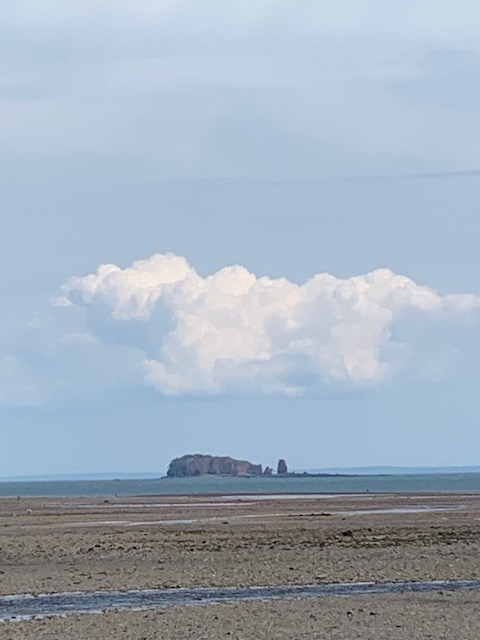
View from Clarke Head toward the Two Brothers, also known as Two Islands. Near Parrsboro, Nova Scotia
The longer I live here, in Parrsboro, Nova Scotia, the more grateful I am! I used to love tavelling as it offered countless opportunities to explore, capture special discoveries and breath-taking scenery with my camera only to move on in the hope that I was there at just the “right” time to make the best image… and we all know that this rarely happens. These days travel is not so easy and I have come to realize that revisiting the beaches I explored already offer new perspectives and fresh insights every time I return.
When I first made strides to settle into our new surroundings I could often be heard exclaiming “This is my favourite beach!” or “There is no place better than this for photographing…” These days I can’t decide which beach is my true favourite. Each and every exploration yields new insights and photo opportunities I never considered before. It’s not just the scenery that changes constantly due to the tides, cloud formations, weather conditions and the seasons. I have come to really appreciate all I have ever learned about light and its properties and how to optimize the nuances to get closer to my perfect image.
I embarked on studying photography in a formal way nine years ago. I had enrolled in an online travel photography course which wet my proverbial appetite to learn more. Then I took the plunge to not only embrace the practical aspects of photography but also learn the technical side. It was a whole new adventure of reading, comprehending and eventually applying the knowledge I was gaining. I was finally getting to know my camera settings, what they can do to aid me in meeting the proper white balance and aperture settings, which lens and filter to use when, how long the exposure setting should be, and when it was more advantageous to shoot in Aperture instead of Manual setting. I also learned to clean my own camera sensor, tested for dead pixels in the sensor and so many more things that are good to know, just in case. I received my Diploma in Photography in 2013 but the path to learn has continued to lead me forward.
The topic of light is always in the foreground, in focus (pun intended) so to speak. Light conditions change constantly, minute by minute, day by day, from season to season. Spring and autumn are the best seasons to explore the outdoors as the sun does not travel so high in the sky. The sun’s lower path yields richer colours naturally. As the days shorten we don’t have to get up so early to capture breath-taking sunrise scenes and we don’t have to wait so long for the Golden Hour near sunset for more richly illuminated images.
In this post I am sharing the same view captured and spaced about 15 minutes apart and near sunset. Each image presents a certain allure, but just look at what happens when the sun slips closer to the horizon…
I hope you found this post interesting and educational at the same time. The images I present on my blog are captured with my iPhone XR, no post processing, no filters and no special apps or special tricks. I look for natural light and utilize it for the most optimal outcome.
May your week be filled with ever-changing sunlight and countless photo opportunities along the way. Best wishes and happy shooting, Anna
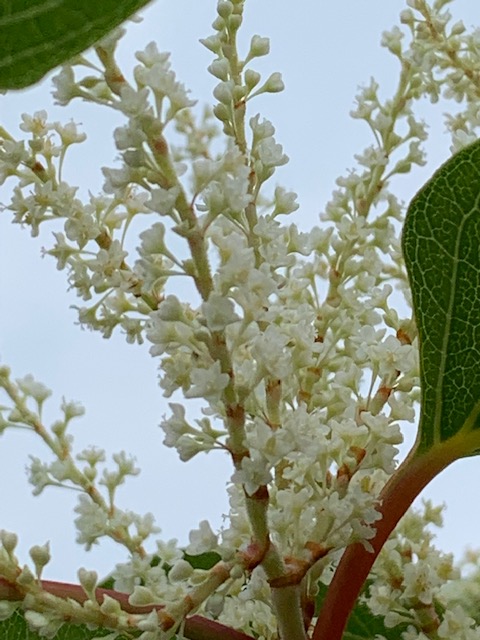
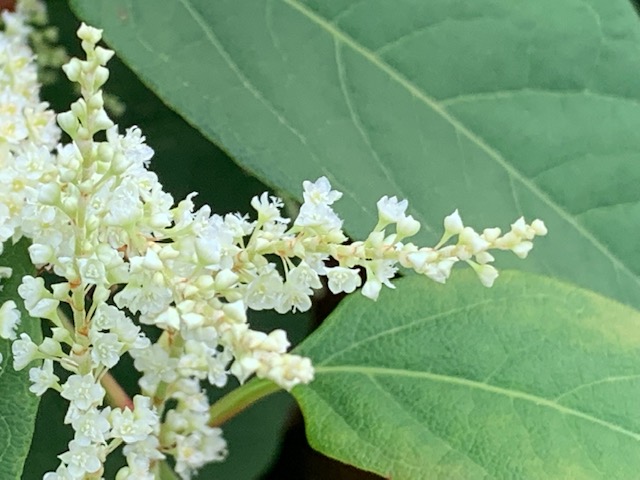
“Fragile white lace sprigs Cascading across green leaves ~ A force of nature.”
*****
From the Slocan Valley in British Columbia all the way to Nova Scotia I have come across this invasive plant. It seems to grow well in a warmer climates. In our neighbourhood I witnessed its rapid growth from early spring till now and decided to do a little research. The haiku above was inspired in combination by the images I captured and the information I gleaned:
Japanese Knotweed is an aggressive semi-woody perennial plant that is native to eastern Asia. In the 1800’s it was introduced to North America as an ornamental species and also planted for erosion control. It has since spread throughout the United States and Canada. Japanese Knotweed is often mistaken for bamboo; however it is easily distinguished by its broad leaves and its ability to survive winters in Canada. Japanese knotweed is especially persistent due to its vigorous root system, which can spread nearly 10 metres from the parent stem and grow through concrete and asphalt. This invader is very persistent and once it becomes established, is incredibly difficult to control.
In Canada, Japanese Knotweed is established from Ontario to Newfoundland and is also found in British Columbia. In Ontario, it is mostly established in southern and central areas of the province where it mostly grows in gardens, along roadsides and near old buildings or former building sites.
When the opportunity arose to join a friend for a sunset hike at the beach earlier this week I suggested Clarke Head as the destination. I had blogged about Clarke Head as the first post here but, I had not had another chance to return all summer.
As soon as I stepped onto the beach time stood still. This beach is not too rocky and therefore not as difficult to navigate as others in the area. I don’t think I need to describe this visit in a lengthy essay, instead, I invite you to click on each image to enlarge them and ponder them at your leisure.
The best part about venturing out later in the day is the light…
…and this time the sky rewarded us with wonderful and ever-changing cloud formations!
Tranquility aided by ocean sounds… the perfect ending to a beautiful summer day. Thank you for tagging along this morning. Enjoy your weekend, Anna

























































 Tide Rollers & Mudlarkers...